 Alfred Ajibola
- 27th January, 2025 @ 12:03 AM
Topics in Chemistry
Chemistry Scheme of Work, SS1 Third Term Chemical Industries: Petrochemicals, Biodegradable, Non-biodegradable Wastes and Pollutants Chemical Industries: Types, Advantages, Disadvantages and Factors affecting Chemical Industries Hydrocarbons: Fractional Distillation of Crude oil and Uses of its Fractions Hydrocarbons: Sources, Classification and Test for Saturated and Unsaturated Hydrocarbons Trioxocarbonates: Preparation, Physical and Chemical Properties, Tests and Uses of Trioxocarbonates Carbon and its Compounds: Oxides of Carbon, Carbon(IV) oxide Carbon and its Compounds: Oxides of Carbon Amorphous Allotropes of Carbon Carbon: Structure and Allotropes of Carbon Salts in Chemistry: Types, Properties, and Uses of Salts Salts in Chemistry, their Classifications, Solubility, Preparations and Colors pH Indicators, Types of Indicators and Importance of pH and pOH Relative Acidity and Alkalinity (pH Scale), and Calculations on pH Bases and Alkalis: Definitions, Classification, Physical and Chemical Properties Bases: Preparation of Bases and Alkalis, Test and Uses Physical and Chemical Properties of Acids, Preparation, Test and Uses of Acids. Acid: Definition, Basicity, and Types of Acid Families of elements in the periodic table Periodic table and Classification of ElementsAcademic Questions in Chemistry
With regards to redox reactions, which of the following statement is wrong?
A. Redox reaction are examples of chemical change
B. Reduction is the gain of electron
C. Substances that donates election during chemical reaction are termed reductants
D. Oxidizing agents are always reduced in chemical reactions
E. Oxidation occurs at the cathode in electrolysis
F. Hydrogen is a reducing agent
In chemistry, physical change is associated only with the rearrangement of molecules while the internal composition of the substance remains the same.
A. True
B. False
_____ electron(s) is a term that describes the number of electron(s) in the outermost shell of an atom.
A. Outer
B. Excess
C. Valence
D. Positive
E. Negative
F. Last
_____ is the negative electrode in electrolysis.
A. Anode
B. Anion
C. Cathode
D. Cation
E. Ion
F. Electrolyte

The above diagram shows the _____ type of bond.
A. Covalent
B. Polar covalent
C. Coordinate covalent
D. Metallic
E. Van dear walls
F. Ionic
Metals are referred to as _____ in their impure state.
A. Diluted
B. Consecrated
C. Coloured
D. Ores
E. Stained
F. Strained
Metals generally have the quality to shine, glow, sparkle, glitter, reflect light and be polished. This characteristic of metals is termed _____.
A. State
B. Ductility
C. Luster
D. Malleability
E. Hardness
F. Inflorescence
The _____ spectrometry experiment conducted on isotopic elements gave a confirmation for the existence of isotopes.
A. Mole
B. Volume
C. Weight
D. Number of moles
E. Mass
F. Amount of substance
Nuclear chemistry is an aspect of chemistry that focuses on the nuclei of atoms. Radioactivity, a focus on nuclear chemistry is defined as the spontaneous (natural and sudden) emission of radiation or particles (alongside energy) by a radioactive element through the breakdown of its nucleus.
Nuclear chemistry is a branch of chemistry that focuses on the chemical and physical properties of radioactivity, nuclear processes, properties and behavior of radionuclides. It holds a significant place in both scientific inquiry and practical applications. For students looking to understand this complex field, exploring its advantages and disadvantages can provide a balanced perspective on its relevance and implications.
Please read the introduction to nuclear chemistry here.
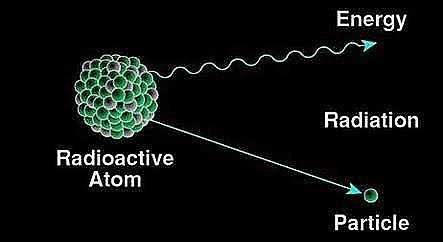
Nuclear chemistry presents both remarkable advantages and significant challenges. Its contributions to energy production and medical advancements are undeniably beneficial, yet the associated risks of radiation and nuclear waste management remain pressing concerns. These advantages and disadvantages of nuclear chemistry are explained below.
You can read on Le Chatelier's principle on concentration and pressure in dynamic equilibrium here.
1. Clean Energy Production
One of the most prominent benefits of nuclear chemistry is its ability to generate energy. Nuclear power plants harness nuclear fission to produce vast amounts of energy with relatively low greenhouse gas emissions compared to fossil fuel-based systems.
Nuclear fission is defined as a process whereby the nucleus of a radioactive element spontaneously splits into lighter nuclei via a nuclear reaction.
This spontaneous splitting of a radioactive element (termed radioactive decay) may also simulated in a laboratory via artificial radioactivity.
This capability of radioactivity contributes significantly to the quest for sustainable energy solutions as the world grapples with climate change.
Please read on the characteristics of alpha particles, beta particles and gamma rays here.
2. Medical Applications
Nuclear chemistry plays a crucial role in medicine, particularly in the field of medical imaging and cancer treatment. Techniques such as PET scans (Positron Emission Tomography) and radiotherapy utilize radioactive isotopes to diagnose and treat various health conditions. This application has revolutionized how diseases are understood and managed.
3. Sterilization
Bacteria and similar microorganisms present in objects can be killed by exposing the object to gamma rays. This process is typically useful in the sterilization of surgical equipment and drugs. Also, this technique of sterilization may be applied in the pasteurization of foods.
Please read on immunization here.
4. Industrial Uses
Radiations such as beta particles and gamma ray can be used for accurate measurement of thickness of materials. Such materials will include metals, plastics and paper respectively.
Another industrial usage of radioisotope is in the rapid checking of faults in welding and casting processes. Cobalt-60 is a radioisotope used for this purpose.
Also, internal leakage and corrosion in pipelines can be detected by adding a radioactive isotope to a liquid flowing in the pipe.
Please read on the chemical properties of matter explained with their characteristics.
5. Agricultural Uses
Radioactivity is often applied in agricultural research to cause a change in the genetic structure (mutations) in plants and animals. This is typically done in other to create plant and animal species with improved and desired characteristics, such as increased size of fruits, plants with greater nutritional value, larger size of animals and so on.
Another agricultural application of radioactivity is in the management and control of insect pests. For example, male pupa of a destructive insect vector may become sterilized by irradiation, such that only male sterile adults are produced.
You can read on cell nucleus in biology here.
6. Dating Techniques
Radioactivity can be utilized by geologists to estimate the age of rocks and other archaeological objects. Also, radio-carbon dating (that is: carbon-14) can be used to determine the age of organic remains found in archaeological excavations.
You can read on igneous rocks here.
With regards to carbon-14; "after the death of living organisms (plants and animals)", the carbon-14 content in their body does not get renewed; rather it decomposes at a known rate. The calculation of this decomposition rate can help scientist determine the age of a specimen.
7. Radioactive Tracers
In both scientific and industrial processes, radioactive isotopes can serve as tracers to monitor and analyze various systems. For example, they can help track the movements of substances in biochemical research or observe fluid dynamics in engineering applications.
You can read on homeostasis and internal environment in biology here.
8. Research and Development
In scientific research, nuclear chemistry enables scientists to investigate fundamental questions about matter and reactions at the atomic level. This understanding can lead to innovative advancements in multiple fields, including materials science and environmental science.
You can read on examples of Charles's law in real life here.
1. Radiation Hazards
One of the most significant drawbacks of nuclear chemistry is the potential harm associated with exposure to radiation. Radioactive substances can pose serious health risks, including increased cancer rates and genetic mutations.
Please read on the concept of cell in biology here.
Proper handling, storage, and disposal of radioactive materials are crucial to mitigate these risks.
2. Nuclear Waste Management
The byproducts of nuclear reactions, particularly in power generation, result in radioactive waste that requires careful management and disposal.
Currently, there is no universally accepted long-term solution for the safe storage of nuclear waste, leading to environmental and ethical challenges.
3. High Costs
The infrastructure required for nuclear power plants, research facilities, and safety measures is expensive. The initial investment is high and can deter countries from pursuing nuclear energy, particularly in comparison to rapidly evolving renewable energy sources like solar and wind.
You can read on Dalton's atomic theory and its modifications here.
4. Proliferation of Weapons
The knowledge and materials developed through nuclear chemistry can be diverted for military purposes, leading to the proliferation of nuclear weapons. This association raises substantial ethical concerns and necessitates stringent regulatory frameworks to prevent the misuse of nuclear technology, including a nuclear bomb.
You can read on compounds in chemistry here.
For students studying this field, understanding these dynamics is essential for contributing to informed discussions about the future applications of nuclear chemistry.
However, it is quite clear that while the potential of nuclear technology is vast, it must be approached with caution, responsibility, and innovation to harness its benefits effectively while mitigating its risks.
Kindly share this article via the links below:
Please click here to contact Alfred if you require any of the following services:
If you need a standard website at an affordable price.
Online training on the academic subjects: biology, chemistry and basic science.
If you require an advanced smart school management system (web application) for your school.
Click here to read on Len Academy Smart School Software.
Please click here to follow Len Academy on Google News.
Amazing facts in Chemistry
Plastic and Glass can decompose, but not in our lifetimes. It takes an average time of 450 years for plastics to decompose. As for the decomposition of glasses, it takes about 4,000 years
The only letters that failed to appear on the periodic table are letters:
Gold and copper are the only two non-silvery colored metals.
Copper is the only metal that is naturally antibacterial. For this reason, some children utilize 'copper water bottles' in schools
Water freezes faster when it’s warm than when it’s cold
Most element in their pure state exists physically in different forms. For instance, pure carbon can exist as both diamond and graphite. This phenomenon is called allotropy
If you pour a handful of salt into a full glass of water, the water level will go down rather than overflowing the glass.
Similarly, if you mix half liter of water and half litre of alcohol, the total volume of the liquid will be les than one litre
Notable points in Chemistry
Below are the physical properties of metals:
They exist in solid state.
The have high densities.
They are good conductors of heat and electricity.
The have the ability to be polished, to glow, sparkle and reflect light.
They can be bent, flattened and made into sheets called foils.
They can be drawn into wires.
Iron undergoes magnetism while most metals are poorly magnetized.
They typical have high melting point.
They generally have high boiling point.
With the exception of lithium, sodium and potassium, most metals are generally hard.
They have the ability to make sound when in contact with other objects or metals.
Please read details on the physical properties of metals here
John Dalton is an English chemist who brought clarity into the composition of matter and the basis for their chemical reactions.
Below are Dalton's Atomic Theory:
All matter consists of tiny indivisible particles called atoms.
Atoms of the same element are identical to each other in every aspect because they have the same shape and mass, while atoms of different elements are different in all respect.
Atoms are indestructible and can neither be created nor destroyed.
Atoms of different elements can combine with each other in simple whole number ratios to form compounds.
Atoms of the same element share similar physical and chemical properties. They can also combine in more than one ratio to form two or more compounds.
Meanwhile, understand that the above theories of John Dalton had been modified.
Please read on Dalton's atomic theory and its modifications here

The periodic table, also called periodic table of elements or Mendeleev's table, is a table that shows an organized arrangement of the 118 chemical elements according to their atomic number.
Out of the 118 elements; elements 1 - 94 are present in nature while elements 95 - 118 are synthesized artificially.
The manner at which elements are arranged on this table reveals some similarities in their electronic configurations and chemical properties.
A compound composed of iron (Fe) and oxygen (O) was analyzed and found to contain 69.94% iron and 30.06% oxygen. Find the empirical formula of the compound. (Molar mass of Fe=55.85, O=16)
Step 1: Identify the given parameter from the question.
Fe = 69.94%, O = 30.06%.
Empirical formula = Fe?O?
Step 2: Convert the percentages to gram. (just attribute grams to the %).
Step 3: To get the mole ratio of each element, convert the gram to moles using the formula (mole = mass/molarmass). Please merorize this formula because we always work with moles in emperical formula.
Mole of Fe: 69.94/55.85 = 1.252mol
Mole of O: 30.06/16 = 1.879mol
Step 4: Divide both sides by the smallest mole ratio.
Iron has the smallest mole ratio in our case, therefore: 1.252/1.252 = 1, 1.879/1.252 = 1.5
We now have the formula = Fe1O1.5
Step 5: Multiply each of the moles by the smallest whole number that will convert each into a whole number. (In our case, the number '2' is the smallest whole number that will make '1.5' and '1' whole numbers when multiplied by it.
For iron (Fe), we will have 1 x 2 = 2
For oxygen (O), we will have 1.5 x 2 = 3
Step 6: Write the empirical formula.
The empirical formula= Fe2O3
Iron(III)tetraoxosulphate(VI)
In chemistry, hydrocarbons can be classified as either aliphatic or aromatic. Recently, both classifications of hydrocarbon were based on their structure rather than their origin.
Aliphatic hydrocarbons are put into three main groups according to the types of bonds they possess. These are:
Alkanes
Alkenes
Alkynes
They are shown in the image below:

It's important to note the followings:
Alkanes have single bonds (only) in their structures.
Alkenes always have a carbon-carbon double bond present in their structure.
Alkynes always have a carbon-carbon triple bond present in their structure.
Aromatic hydrocarbons are classified into:
