 Alfred Ajibola
- 06th October, 2026 @ 11:59 AM
Topics in Chemistry
Chemistry Scheme of Work, SS1 Third Term Chemical Industries: Petrochemicals, Biodegradable, Non-biodegradable Wastes and Pollutants Chemical Industries: Types, Advantages, Disadvantages and Factors affecting Chemical Industries Hydrocarbons: Fractional Distillation of Crude oil and Uses of its Fractions Hydrocarbons: Sources, Classification and Test for Saturated and Unsaturated Hydrocarbons Trioxocarbonates: Preparation, Physical and Chemical Properties, Tests and Uses of Trioxocarbonates Carbon and its Compounds: Oxides of Carbon, Carbon(IV) oxide Carbon and its Compounds: Oxides of Carbon Amorphous Allotropes of Carbon Carbon: Structure and Allotropes of Carbon Salts in Chemistry: Types, Properties, and Uses of Salts Salts in Chemistry, their Classifications, Solubility, Preparations and Colors pH Indicators, Types of Indicators and Importance of pH and pOH Relative Acidity and Alkalinity (pH Scale), and Calculations on pH Bases and Alkalis: Definitions, Classification, Physical and Chemical Properties Bases: Preparation of Bases and Alkalis, Test and Uses Physical and Chemical Properties of Acids, Preparation, Test and Uses of Acids. Acid: Definition, Basicity, and Types of Acid Families of elements in the periodic table Periodic table and Classification of ElementsAcademic Questions in Chemistry
With regards to redox reactions, which of the following statement is wrong?
A. Redox reaction are examples of chemical change
B. Reduction is the gain of electron
C. Substances that donates election during chemical reaction are termed reductants
D. Oxidizing agents are always reduced in chemical reactions
E. Oxidation occurs at the cathode in electrolysis
F. Hydrogen is a reducing agent
In chemistry, physical change is associated only with the rearrangement of molecules while the internal composition of the substance remains the same.
A. True
B. False
_____ electron(s) is a term that describes the number of electron(s) in the outermost shell of an atom.
A. Outer
B. Excess
C. Valence
D. Positive
E. Negative
F. Last
_____ is the negative electrode in electrolysis.
A. Anode
B. Anion
C. Cathode
D. Cation
E. Ion
F. Electrolyte

The above diagram shows the _____ type of bond.
A. Covalent
B. Polar covalent
C. Coordinate covalent
D. Metallic
E. Van dear walls
F. Ionic
Metals are referred to as _____ in their impure state.
A. Diluted
B. Consecrated
C. Coloured
D. Ores
E. Stained
F. Strained
Metals generally have the quality to shine, glow, sparkle, glitter, reflect light and be polished. This characteristic of metals is termed _____.
A. State
B. Ductility
C. Luster
D. Malleability
E. Hardness
F. Inflorescence
The _____ spectrometry experiment conducted on isotopic elements gave a confirmation for the existence of isotopes.
A. Mole
B. Volume
C. Weight
D. Number of moles
E. Mass
F. Amount of substance
Allotropy is defined the existence of an element in two or more different physical forms in the same physical state, with the different forms (allotropes) having different physical properties but the same chemical properties.
Carbon exist as allotropes. These are grouped into:
Crystalline allptropes of carbon: Examples are diamond, graphite and fullerenes. Please read more on the crystalline allptropes of carbon here.
Amorphous allotropes of carbon.
Amorphous forms (or allotropes) of carbon look shapeless and lack a macro-crystalline structure. They do not have a regular crystal lattice; but rather, consist mainly of graphite in a very fine, impure and disordered form.
Below are examples of amorphous forms of carbon:
Coal: They are formed from fossilized plant remains over millions of years.
Coke: They are obtained from the destructive distillation of coal (that is, heating coal in the absence of air)
Charcoal: They are obtained from the destructive distillation (or incomplete combustion) of wood.
Animal charcoal (or bone charcoal): They are obtained by heating bones in the absence of air. They serve as good adsorbent, are and used in sugar refining.
Soot / Lamp black / Carbon black: They are fine carbon powder formed from incomplete combustion of carbon compounds (e.g., burning oil/kerosene with insufficient air). They are used in making printing ink, shoe polish, and tyres (as rubber reinforcement).
The table below shows the differences between crystalline and amorphous allotropes of carbon.
| Feature | Crystalline Allotropes of Carbon | Amorphous Allotropes of Carbon |
| Atomic Arrangement | Regular, definite, repeating 3D pattern with long-range order | Irregular, random arrangement with only short-range order |
| Hardness and Rigidity | They are highly rigid and often very hard (e.g, diamond) | They are usually softer and less rigid |
| Purity | They are pure forms of carbon | They often contain impurities |
| Melting Point | They have high and more precise (definite melting point) | They have lower melting points, and melts gradually over a wide temperature range. |
| Shape and Geometry | They have well-defined geometric shapes and sharp edges | They lack a definite geometric shape (powdery or irregular) |
| Conductivity | Graphite conducts heat and electricity. | Generally poor conductors of heat and electricity |
| Examples | Diamond, Graphite, Fullerene and Graphene | Coal, Charcoal, Coke, Lampblack (soot) |
Please read the introduction to carbon and crystalline allotropes of carbon here.
Below are explanations on the amorphous forms of carbon.
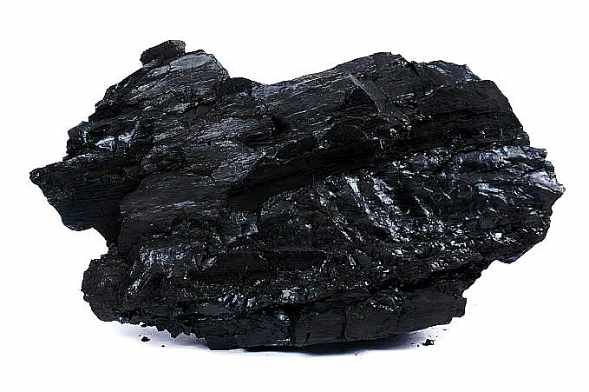
Coal is a hard, black, combustible sedimentary rock formed from the compressed, fossilized remains of plants that lived and died millions of years ago, subjected to heat and pressure underground in the absence of air. This process of coal formation is termed carbonization.
The image below shows the physical structure of coal.
Peat: This is the first stage of coal type. It is a soft, brown, spongy, partially decayed plant material containing the lowest carbon content (~50–60%). It has a low heat value.
Lignite. It is often termed "brown coal". It is soft and brownish-black; with carbon content about 60–70%. Lignite still shows plant texture.
Bituminous coal: It is a dense and black; with carbon content about 70–85%. It is the most commonly mined and used type. It burns with a smoky flame.
Anthracite: This is the hardest, shiniest, and oldest type of coal. It has the highest carbon content (over 90–95%); and burns with little smoke. It gives the most heat.
You can read on relative acidity and alkalinity (pH scale) here.
Coal has a color that varies from brown (in lignite) to dull or shiny black (in bituminous coal and anthracite).
It has variable hardness. It is soft and crumbly in lower ranks like lignite, becoming tough and hard in higher ranks like anthracite.
Its density ranges from 1.1 to 1.5 g/cm³, making it slightly denser than water and lighter than common rock minerals.
It is made primarily of carbon (~ 50% to 90% by weight, serving as the primary heat source. Other elements comprising coal include hydrogen (2% to 40%), Oxygen & Nitrogen (~2% and 12%), and sulfur (0.5% to 3%).
Coal contains a network of macropores, mesopores, and micropores, giving it high internal surface areas which can be useful for gasification and filtration.
You can read on mixtures and characteristics of mixtures here.
Nigeria's coal deposits are found mainly in the eastern and central parts of the country: Below are the states where they are found:
Enugu State: This is the major historical coal-producing area of Nigeria: It include places like Iva Valley, Onyeama, Okpara, and Ribadu mines. Enugu is often called the "Coal City" because of this.
Kogi State: It include places like Okaba and Lafia-Obi coalfields.
Benue State: Include places like Orukpa/Owukpa coal deposits.
Gombe State: Include the Dadin-Kowa coal deposit.
Plateau State: Coal deposits are found around the Plateau area.
Anambra State: Coal deposits in areas around the Anambra basin.
Smaller deposits of coal are also found in Abia and Adamawa states.
Note: Coal mining in Nigeria began in Enugu in 1909 under the colonial government; and was historically managed by the Nigerian Coal Corporation (NCC).
You can read on bases and alkalis, its classification, physical.and chemical properties here.
Destructive distillation is defined as the strong heating of an organic substance in the absence of air (oxygen), so that it decomposes into simpler, more useful products, instead of burning completely to ash.
Destructive Distillation of Coal
When bituminous (soft) coal is strongly heated in a closed retort/oven without air, it breaks down into the following:
Coke: This is the solid residue left behind (mainly carbon). It remains in the retort.
Coal tar: This is a thick, black liquid mixture of many organic compounds (benzene, naphthalene, phenol, etc), which are condensed from the vapours.
Ammoniacal liquor: This is a liquid containing ammonia and its compounds, also condensed out of the vapours.
Coal gas: This is a mixture of gases that do not condense. They largle include hydrogen gas (H2), methane (CH4), carbon monoxide (CO), and small amounts of other hydrocarbons; used as fuel gas.
Below is a simple summary equation of the destructive distillation of coal in word form:
Coal (heated, no air) → Coke + Coal tar + Ammoniacal liquor + Coal gas
Please read on the physical and chemical properties of acids, test and uses of acids here.
Destructive Distillation of Wood
When wood is heated strongly in the absence of air, it decomposes to give the following:
Charcoal: This is the solid carbon residue.
Wood tar: This is a liquid mixture of organic compounds.
Pyroligneous acid (wood vinegar): This is an aqueous liquid containing acetic acid (CH3COOH), methanol (CH3OH), wood spirit/wood alcohol, and acetone (C3H6O).
Wood gas: This is a mixture of combustible gases such as methane, carbon monoxide, hydrogen, etc. They are used as fuel.
Below is a simple summary equation of the destructive distillation of wood in word form:
Wood (heated, no air) → Charcoal + Wood tar + Pyroligneous acid + Wood gas
You can read on salts in chemistry, their classification, solubility and colors here.
Coke is the solid, porous, greyish-black residue left after the destructive distillation of coal. It is almost pure carbon (with some ash and small amounts of sulphur and other impurities). It can serve as a good, smokeless fuel.
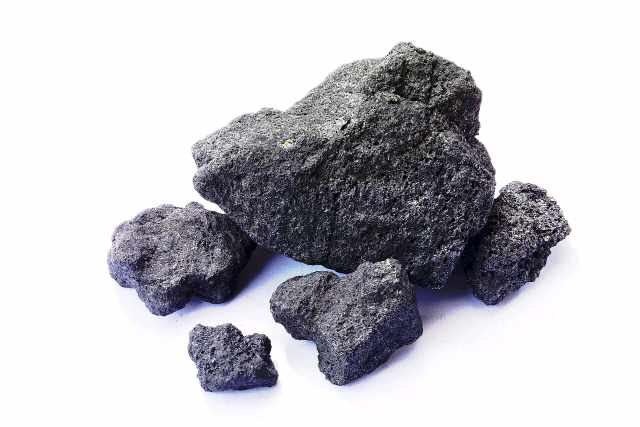
Coke shows the following properties:
It is a hard, porous, and black or greyish-black solid.
It is smokeless when burnt.
It has a high carbon content, giving high calorific (heat) value.
It does not soften or melt when heated further (unlike the original coal).
It has a high crushing strength (that is, high impact resistance). This implies that coke can resist fracturing from heavy impact forces (and the weight of the blast furnace burden, that is; iron ore and limestone).
Its bulk specific gravity is typically around 0.77.
You can attempt various questions in chemistry here.
Gasification refers to the process of converting solid coke into combustible gaseous fuels by reacting it with steam and/or air at high temperature.
Gasification of coke is applied in the manufacture of producer gas and water gas.
1. Water gas
Water gas is manufactured by passing steam over red-hot coke (at about 1000 °C). This is shown via the equation below:
Water gas is a mixture mainly of carbon monoxide (CO) and hydrogen (H2)
The above reaction is endothermic (meaning that it absorbs heat from the surroundings). As a result, the carbon must be kept red-hot by an external heat source or alternating air blasts. Since the coke cools down as the reaction proceeds, the process must be interrupted periodically to reheat the coke (usually by blowing hot air through it, which is how producer gas is made in the same cycle).
Water gas is a mixture mainly of carbon monoxide (CO) and hydrogen (H2). It is a valuable industrial fuel and source of hydrogen (e.g., for the Haber process and for hydrogenation reactions).
Please read on rate of chemical reaction here.
2. Producer gas
Producer gas is manufactured by passing a limited (insufficient) supply of air over red-hot coke. This is shown via the equation below:
Producer gas is mainly a mixture of carbon monoxide (CO) and nitrogen (N2).
This reaction is exothermic (meaning that heat is given off to the surrounding), and it reheats the coke bed, allowing the process to alternate with water-gas production.
Producer gas is mainly a mixture of carbon monoxide and nitrogen, (with the nitrogen acting as a diluent, giving it a lower heat value than water gas).
You can read on chemical (dynamic) equilibrium in chemistry here
It is used as a smokeless domestic fuel.
It is used as a reducing agent in the extraction of metals, especially in the blast furnace for smelting iron ore. In this reaction, coke reduces iron(III) oxide to iron and also burns to provide heat. This is shown via the equation below
Fe₂O₃(s) + 3CO(g) → 2Fe(s) + 3CO₂(g)
It is utilized in the manufacture of water gas and producer gas (industrial fuel gases).
It is used in the manufacture of calcium carbide (CaC₂), by heating coke with quicklime (CaO) in an electric furnace . Calcium carbide is used to produce ethyne (acetylene) gas.
It is used as a source of carbon in various metallurgical and chemical industries.
It is used in electrodes for some electrochemical processes.
You can read on ionic theory and electrolysis here.
It is used as a domestic and industrial fuel for heating and generating steam.
It is used in thermal power stations for the generation of electricity.
It is used as a raw material for the destructive distillation industry, (to obtain coke, coal tar, ammoniacal liquor and coal gas).
Coal tar is a derivative of coal used in making dyes, drugs, perfumes, explosives (e.g., TNT), disinfectants (e.g., phenol), and synthetic fibres.
It is used in the iron and steel industry (as coke) for smelting.
It is used in the manufacture of synthetic petrol and other chemicals.
Please read the next topic (oxides of carbon CO and CO2) here.
Kindly share this article via the links below:
Please click here to contact Alfred if you require any of the following services:
If you need a standard website at an affordable price.
Online training on the academic subjects: biology, chemistry and basic science.
If you require an advanced smart school management system (web application) for your school.
Click here to read on Len Academy Smart School Software.
Please click here to follow Len Academy on Google News.
Amazing facts in Chemistry
Plastic and Glass can decompose, but not in our lifetimes. It takes an average time of 450 years for plastics to decompose. As for the decomposition of glasses, it takes about 4,000 years
The only letters that failed to appear on the periodic table are letters:
Gold and copper are the only two non-silvery colored metals.
Copper is the only metal that is naturally antibacterial. For this reason, some children utilize 'copper water bottles' in schools
Water freezes faster when it’s warm than when it’s cold
Most element in their pure state exists physically in different forms. For instance, pure carbon can exist as both diamond and graphite. This phenomenon is called allotropy
If you pour a handful of salt into a full glass of water, the water level will go down rather than overflowing the glass.
Similarly, if you mix half liter of water and half litre of alcohol, the total volume of the liquid will be les than one litre
Notable points in Chemistry
Below are the physical properties of metals:
They exist in solid state.
The have high densities.
They are good conductors of heat and electricity.
The have the ability to be polished, to glow, sparkle and reflect light.
They can be bent, flattened and made into sheets called foils.
They can be drawn into wires.
Iron undergoes magnetism while most metals are poorly magnetized.
They typical have high melting point.
They generally have high boiling point.
With the exception of lithium, sodium and potassium, most metals are generally hard.
They have the ability to make sound when in contact with other objects or metals.
Please read details on the physical properties of metals here
John Dalton is an English chemist who brought clarity into the composition of matter and the basis for their chemical reactions.
Below are Dalton's Atomic Theory:
All matter consists of tiny indivisible particles called atoms.
Atoms of the same element are identical to each other in every aspect because they have the same shape and mass, while atoms of different elements are different in all respect.
Atoms are indestructible and can neither be created nor destroyed.
Atoms of different elements can combine with each other in simple whole number ratios to form compounds.
Atoms of the same element share similar physical and chemical properties. They can also combine in more than one ratio to form two or more compounds.
Meanwhile, understand that the above theories of John Dalton had been modified.
Please read on Dalton's atomic theory and its modifications here

The periodic table, also called periodic table of elements or Mendeleev's table, is a table that shows an organized arrangement of the 118 chemical elements according to their atomic number.
Out of the 118 elements; elements 1 - 94 are present in nature while elements 95 - 118 are synthesized artificially.
The manner at which elements are arranged on this table reveals some similarities in their electronic configurations and chemical properties.
A compound composed of iron (Fe) and oxygen (O) was analyzed and found to contain 69.94% iron and 30.06% oxygen. Find the empirical formula of the compound. (Molar mass of Fe=55.85, O=16)
Step 1: Identify the given parameter from the question.
Fe = 69.94%, O = 30.06%.
Empirical formula = Fe?O?
Step 2: Convert the percentages to gram. (just attribute grams to the %).
Step 3: To get the mole ratio of each element, convert the gram to moles using the formula (mole = mass/molarmass). Please merorize this formula because we always work with moles in emperical formula.
Mole of Fe: 69.94/55.85 = 1.252mol
Mole of O: 30.06/16 = 1.879mol
Step 4: Divide both sides by the smallest mole ratio.
Iron has the smallest mole ratio in our case, therefore: 1.252/1.252 = 1, 1.879/1.252 = 1.5
We now have the formula = Fe1O1.5
Step 5: Multiply each of the moles by the smallest whole number that will convert each into a whole number. (In our case, the number '2' is the smallest whole number that will make '1.5' and '1' whole numbers when multiplied by it.
For iron (Fe), we will have 1 x 2 = 2
For oxygen (O), we will have 1.5 x 2 = 3
Step 6: Write the empirical formula.
The empirical formula= Fe2O3
Iron(III)tetraoxosulphate(VI)
In chemistry, hydrocarbons can be classified as either aliphatic or aromatic. Recently, both classifications of hydrocarbon were based on their structure rather than their origin.
Aliphatic hydrocarbons are put into three main groups according to the types of bonds they possess. These are:
Alkanes
Alkenes
Alkynes
They are shown in the image below:

It's important to note the followings:
Alkanes have single bonds (only) in their structures.
Alkenes always have a carbon-carbon double bond present in their structure.
Alkynes always have a carbon-carbon triple bond present in their structure.
Aromatic hydrocarbons are classified into:
