 Alfred Ajibola
- 08th February, 2026 @ 07:58 AM
Topics in Home Economics
PVS Examination for JSS1 First Term Exercise: Types, Importance and Guidelines for exercising the body Posture: Importance and Guidelines for a Good Posture Fatigue, Rest and Sleep The Skin:Types, Functions, Care of Skin and Skin Infections The Skin: Layers, Functions, Care and Skin Injuries Tooth Infection: Causes and Prevention of Tooth Infection The Tooth: Structure, Type, Functions and Care of the Teeth Feet, Nails and Pedicuring The Hands, Nails and Manicuring The Ear and Nose: Structure, Functions and Care of the Ear and Nose The Eye: Structure, Functions, Care of the Eye and Eye Defects in Humans Hair Infection; Types, Treatment and Prevention of Hair Infections The Hair: Types, Functions, and Care of the Hair Careers in Home Economics and Importance of Home Economics Introduction to Home Economics Home Economice Scheme of Work for JSS1, First Term Aims and Objectives of Home Economics: Topics covered in Home Economics Bloating: Factors that causes bloating and its treatment How to prepare the Nigerian coconut riceAcademic Questions in Home Economics
1. The discolorations of the skin without breaking is known as _____.
A. cut
B. burn
C. scald
D. bruises
Please read on skin injuries here.
2. The part of the eyes which allow the passage of light to the lens is called the _____.
A. iris
B. cornea
C. pupil
D. retina
3. The following are examples animals capable of injecting venom through piercing the skin except _____.
A. snake
B. bee
C. scorpion
D. mosquito
Please read on skin infections here.
4. _____ are the organs for sight
A. Eye lids
B. Eye balls
C. Eye lashes
D. Eye brows.
5. The infection caused by ill-fitting shoes is known as _____.
A. calluses
B. waxy skin
C. athlete's foot
D. corns
Please read on feet, nails and pedicure here.
6. The crops that complete their life cycle within the period of two years are called _____.
A. annual crops
B. dual crops
C. biennial crops
D. perennial crops
Please read on the differences between plants and crops here.
7. Which of the following is correct?
A. tongue for swelling.
B. ears for singing
C. nose for touching
D. skin for feeling
8. The natural state in which mind and body are unconscious of the environment is known as _____.
A. sleep
B. rest
C. exercise
D. fatigue
Please read on fatigue, rest and sleep here.
9. _____ is the system of farming whereby a farmer leads cattle from one place to another in search of food.
A. Ranching
B. Arable farming
C. Nomadic farming
D. Ley farming
Please read on pastoral farming here.
10. A branch of agriculture that deals with the study of soil and surveying is known as _____.
A. Soil science
B. Fishery
C. Heliculture
D. crop science
Please read on the branches of agriculture here.
11. The process whereby excess water is given off on the leaf of a plant is known as _____.
A. evaporation
B. pollination
C. transpiration
D. photosynthesis
Please read on the leaf of plants here.
12. Which part of the plant that absorbs water and nutrients?
A. Stem
B. Root
C. leave
D. Flower
Please read on the roots of plants here.
13. The care and treatment of the feet and nails is known as?
A. manicure
B. cleaning activity
C. buffering
D. pedicure
14. The ear helps to maintain _____.
A. offensive odour
B. balance
C. power
D. noise
Please read on the ear and nose here.
15. Which of the following is a type of hair?
A. thick and coarse
B. long tiny
C. fine and soft
D. twisted dreadlock
Please read on the types, functions and care of the hair here.
16. Which of the following exercises help to build strong muscle?
A. Aerobic
B. Strengthening
C. Stretching
D. Jumping
Please read on exercises and its types here.
17. Which of the following farming systems is most suitable in a school farm where there is no enough land for agriculture?
A. Shifting cultivation
B. Ley farming
C. Mono cropping
D. Crop rotation
Please read on shifting cultivation here.
18. The following are career in food services except _____.
A. planning and washing
B. supervisors
C. stewards
D. catering managers
Please read on careers in home economics here.
19. Which of the following parts of the toe nails harbors germs?
A. Nail bed
B. Nail plate
C. Nail cuticle
D. Nail crescent.
20. A person who develops pattern for sale in clothing and textile is called ......
A. a pattern distributor
B. a pattern designer
C. an advertiser
D. a pattern illustrator
Section I: Agricultural science
Question 1
(A) Define the term "Mixed cropping".
(B) Outline any four advantages of mixed cropping.
Please read on mixed cropping here.
Question 2
(A) In a tabular form, outline any three differences between commercial agriculture and subsistence agriculture.
(B) Mention any four branches of agriculture.
Please read on the branches of agriculture here.
Please read on subsistence and commercial agriculture here.
Question 3
(A) Following the principles of crop rotation, prepare a four year crop rotation course with the following crops: groundnut, cassava, yam and maize.
(B) Outline any three (3) functions of a root to a plant.
Please read on the principles and importance of crop rotation here.
Section II: Home Economics
Question 4
(A) Mention the two layers of the skin.
(B) Outline any three functions of the skin.
You can read motivational quotes for students here.
Question 5
(A) Mention any two common eye defects.
(B) Describe the two common eye defects mentioned in 5(a).
(C) Copy and complete the table.
| Parts of the Eye | One Function Each |
| Cornea | |
| Lens | |
| Retina |
You can read key points on various academic subjects here.
Question 6
(A) Define the term "Exercise".
(B) Outline any thre importance of an exercise. (3 marks) body muscles to perform
Please read interesting facts for students here.
Alternative to Practical
Question 7
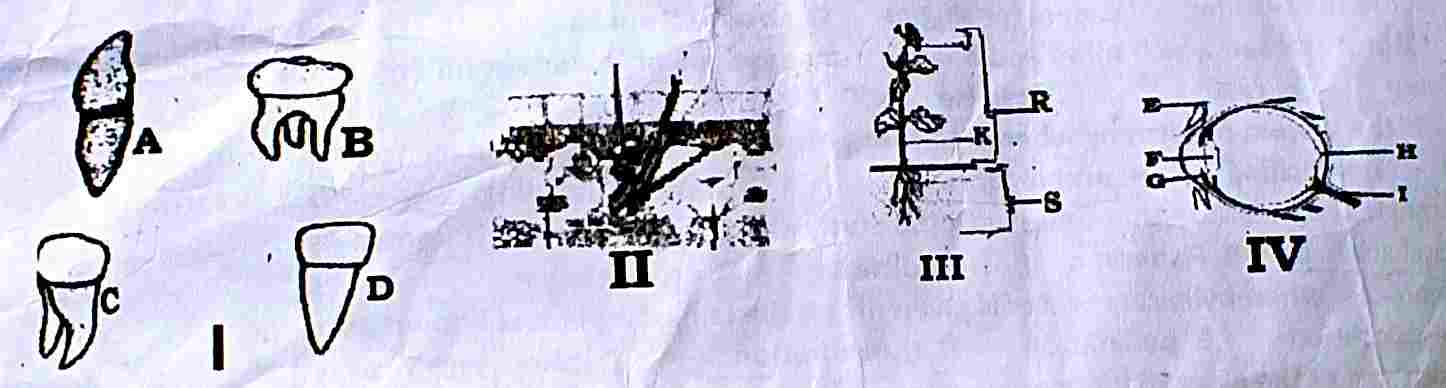
I. __________ II. __________ III. __________ IV. __________
Question 8
A. __________ B. __________ C. __________ D. __________
J. __________ K. __________ R. __________ S. __________
B. __________
D. __________
E. __________
H. __________
Kindly share this article via the links below:
Please click here to contact Alfred if you require any of the following services:
If you need a standard website at an affordable price.
Online training on the academic subjects: biology, chemistry and basic science.
If you require an advanced smart school management system (web application) for your school.
Click here to read on Len Academy Smart School Software.
Please click here to follow Len Academy on Google News.
Amazing facts in Home Economics

Pound cake (a type of cake) is traditionally made with each of four ingredients weighing a pound. The ingredients are: one pound of flour, one pound of butter, one pound of eggs, and one pound of sugar respectively. This is why it's called a pound cake
Ice cream was once called cream ice
Sharp knives are safer. They are less likely to cut you that dull knives
Honey is a food that never spoils
Pilule Pet are pills (dietary supplements) that can make your poo smell like chocolate
Peanut oil can be used to make explosives like dynamite

Applesauce
Applesauce was the first food eaten in space by astronauts
The first menu item when McDonald's commenced operations was actually 'hot dogs' and not 'hamburgers'
Notable points in Home Economics